
⚠️ Affiliate Disclosure: BuyCycleWorld.com is a participant in the Amazon Associates Programme, an affiliate advertising programme designed to provide a means for sites to earn advertising fees by advertising and linking to Amazon.co.uk. When you click our links and make a purchase, we may earn a small commission at no extra cost to you. This helps us keep the site running and the reviews coming. We only recommend products we genuinely believe in.

A good sleeping bag is the heart of a bikepacking kit list. Too cold and you cannot sleep; too heavy and it dominates your packing list. British summers can drop to near freezing in the Scottish Highlands and spring and autumn tours often encounter temperatures that demand a serious sleeping bag. Here are the best cycling sleeping bags for UK touring.
Top Picks
Western Mountaineering UltraLite Sleeping Bag
Western Mountaineering makes the finest sleeping bags in the industry and the UltraLite is their sweet spot for three-season touring. The 850-fill goose down provides exceptional warmth-to-weight ratio and packs into a stuff sack barely larger than a 750ml water bottle. The build quality is outstanding and the bag lasts for decades with proper care. The benchmark for serious touring cyclists.

- 3-Dimensional full down collar wraps snugly around your neck to seal in your body heat
- 5 1/4 spacing of continuous baffles that stretch from zipper to zipper
- Full-length YKK zipper
Rab Neutrino 400 Down Sleeping Bag
Rab is a UK brand with deep roots in mountain gear and the Neutrino 400 is their high-performance bikepacking bag. The 800-fill European goose down is treated with Nikwax Hydrophobic Down which provides significant resistance to moisture — important for UK camping where condensation is a constant challenge. Rated to minus 9 degrees Celsius.
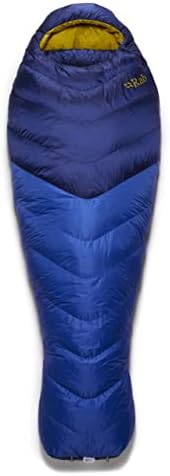
- Pertex Quantum Outer Fabric
- Lightweight Nylon Ripstop Inner Fabric
- 800 R.D.S Certified European Goose Down
Alpkit Pipedream 400 Down Sleeping Bag
Alpkit consistently delivers outstanding value and the Pipedream 400 is their benchmark three-season bag. The 850-fill Hydrophobic European goose down provides serious warmth without the price premium of the top brands and the pack size is genuinely compact. An excellent choice for cyclists who want quality down performance without spending over £300.

- Enjoy more sleeping space than a regular sleeping bag or unzip to form a comfortable quilt: a lightweight camping quilt …
- Draw cord at either end of quilt
- 12 baffles
Sea to Summit Spark III Down Sleeping Bag
Sea to Summit is renowned for ultralight camping gear and the Spark III uses 850-plus fill power ethically-sourced goose down in an ultralight nylon shell. The bag weighs under 700g and packs into a stuff sack the size of a large water bottle. The three-season temperature rating suits most UK camping scenarios from April to October.

- ENGINEERED FOR WOMEN: This single sleeping bag features a narrower shoulder and wider hip area, with extra down insulati…
- PREMIUM DOWN INSULATION: Filled with Ultra-Dry Goose Down 850+ Loft, this mummy sleeping bag offers an optimal warmth-to…
- ENHANCED OUTDOOR PERFORMANCE: Ideal for spring to fall adventures, this ladies sleeping bag is rated to -9°C, providing …
Mountain Equipment Helium 600 Sleeping Bag
Mountain Equipment is a British manufacturer with an excellent reputation in the outdoor community. The Helium 600 uses 800-fill EarthHold down and the contoured hood design minimises warmth loss around the head. The quality of stitching and baffling is outstanding and the temperature rating is honest — a genuine three-season bag for UK summer tours.

- SUPER WARM :The cold weather sleeping bag is filled with 1000g 650FP premium white duck down to keep you warm at -15 deg…
- UPDATED VERSION: Camping Gear,Unfolded Size:225 cmx 82cm.The upgraded down sleeping bag for adults has larger and more s…
- LEIGHTWEIGHT&COMPACT: This lightweight winter sleeping bag is a must-have for chilly nights outside. The winter sleeping…
Buying Guide
Down versus synthetic: down is warmer, lighter and more compressible. Synthetic maintains some insulation when wet. For UK camping with proper waterproofing, treated down outperforms synthetic in all meaningful metrics.
Temperature ratings require context. Comfort ratings are more useful than extreme ratings for cycling. A bag comfortable at 2 degrees Celsius handles all but the coldest UK summer camping.
Hydrophobic down treatment is worth paying for. UK camping involves high humidity and condensation. Treated down maintains more of its loft when slightly damp compared to untreated down.
Compression sacks are separate from stuff sacks. The included bag usually packs the bag to its minimum size. A compression sack can reduce packed volume by 30 percent — useful for tight bikepacking packs.
A sleeping bag liner adds 3 to 5 degrees Celsius of warmth and keeps the bag clean, extending intervals between washing. A silk liner adds negligible weight and packs to almost nothing.
🚴 Related Reading
Final Thoughts
For serious UK bikepacking, Rab and Mountain Equipment sleeping bags deliver outstanding performance with the understanding of British conditions that comes from being UK mountain brands. On a tighter budget, the Alpkit Pipedream 400 delivers genuine quality at a very accessible price.
Buying Guide
A cycle touring sleeping bag must pack small enough to fit in a saddle bag or handlebar roll, provide adequate warmth for the UK’s variable overnight temperatures (ranging from 20 degrees Celsius on a warm Devon night to -2 degrees Celsius on a Scottish Highlands morning in June), and dry quickly when exposed to the condensation and damp that inevitably accompanies UK wild camping. Weight and pack size are the primary selection criteria for bikepackers; touring cyclists on rack-based setups have more latitude for heavier, more affordable options.
| Factor | What to Look For |
|---|---|
| Temperature Rating | The EN 13537 standard provides consistent temperature ratings: comfort rating (the temperature at which a standard woman sleeps comfortably), lower limit (standard man) and extreme (minimum survival temperature). For UK summer bikepacking (June to September), a comfort rating of 5 to 8 degrees Celsius is appropriate; for UK shoulder season (April-May and October), a comfort rating of 0 to 3 degrees Celsius is needed; for year-round or Highland touring, 0 to -5 degrees Celsius comfort rating is recommended. Match the bag’s comfort rating to the coldest anticipated overnight temperature rather than average temperatures. |
| Fill Type: Down vs Synthetic | Goose down sleeping bags pack 30 to 50% smaller and weigh 20 to 40% less than equivalent-warmth synthetic bags, and are strongly preferred for bikepacking due to their superior pack volume. The disadvantage of down is severe performance loss when wet — a critical consideration for UK wild camping where tent condensation and ground damp can wet a down bag over multiple nights. Hydrophobic down treatments (DownTek, Nikwax Hydrophobic Down) significantly mitigate this by treating each down cluster to resist moisture absorption. For UK touring, hydrophobic-treated down is the optimal choice; untreated down carries unacceptable risk in the UK’s damp camping conditions. |
| Pack Volume | A sleeping bag packed into its stuff sack should fit within 3 to 5 litres for bikepacking — achievable with 600+ fill power down bags in a 3-season rating. Compression stuff sacks reduce packed volume further but compress down clusters and reduce loft over repeated compressions; a loose mesh stuff sack is better for long-term down health. For touring cyclists using panniers, packed volume is less critical — a synthetic bag of 8 to 10 litres packed volume is entirely practical in a 40-litre pannier. |
| Bag Shape | Mummy-shaped bags with a hood are significantly warmer weight-for-weight than rectangular bags because they minimise the air volume the body must heat. Bikepackers should always use mummy-shaped bags. Semi-rectangular or “comfort” shapes suit touring cyclists who find the confined feel of a mummy bag uncomfortable and who carry the bag in a pannier where pack size is not restrictive. The shoulder baffle and neck collar of a quality mummy bag prevent heat loss at the critical transition between bag and air. |
| Inner Lining and Moisture Management | A soft polyester or recycled polyester liner transfers moisture away from the sleeping surface, improving perceived warmth. Outer shell fabrics with a DWR coating repel condensation from the tent inner when it contacts the bag surface. Zips with draught baffles behind them prevent cold air infiltrating along the zip line — standard on quality bags but often absent on cheap alternatives. A two-way zip allows ventilation at the feet without opening the upper bag. |